 FIYR
FIYR Recurring Income Planning: Turn Paydays Into a Simple System
Most budgets fail for a dumb reason: paydays show up like random plot twists, and your plan has the emotional stability of a group chat.
Recurring income planning fixes that. It turns “I got paid!” into a repeatable system, where bills get handled, goals get fed, and you stop doing the monthly ritual of moving money around like you’re defusing a bomb.
And yes, it matters. CNBC reported that about 60% of Americans are living paycheck to paycheck. Translation: one weird expense and suddenly your budget is performance art.
Here’s the part nobody talks about: a “monthly budget” is a lie if your income hits on a different rhythm. The fix is not more discipline. The fix is a better calendar.
What recurring income planning actually means (and why it’s not just “budgeting”)
Recurring income planning is simple:
- You map your income by cadence (weekly, biweekly, semimonthly, monthly).
- You decide what every paycheck must do before you get tempted by the dopamine aisle.
- You automate the boring stuff so you only have to be a responsible adult for like 12 minutes a week.
This is less “budgeting” and more cash flow choreography.
If budgeting is deciding what you should do, recurring income planning is deciding what happens when money actually arrives.
Quotable truth: A budget without a payday plan is just a spreadsheet with hopes and prayers.
A quick story: the “third paycheck” trap
Meet Jordan. Jordan gets paid biweekly, which sounds stable until you realize biweekly means 26 paychecks a year, not 24.
Jordan built a monthly budget. Rent is due on the 1st. Paychecks land whenever they feel like it.
Most months, Jordan is fine. Then the calendar does its little gremlin thing:
- One month has three paychecks.
- Jordan feels rich.
- Jordan upgrades life in 72 hours (new shoes, nicer groceries, “accidental” weekend trip).
- The next month goes back to two paychecks.
- Jordan is confused, annoyed, and somehow blames “inflation.”
Recurring income planning prevents this by giving the “extra” paycheck a job before it becomes a lifestyle upgrade.
Step 1: Inventory your income like a CFO, not like a vibe
Start by listing every income stream that shows up with any regularity.
Create two labels:
- Core income: predictable, shows up on schedule (salary, pension, reliable child support).
- Bonus income: variable, seasonal, or chaos-coded (commissions, gig work, RSU vesting sales, Etsy, reimbursements).
Then capture cadence and “reliability.” Not for judgment, for planning.
| Income source | Typical net amount | Cadence | Reliability | Planning use |
|---|---|---|---|---|
| W-2 paycheck | $X,XXX | Biweekly | High | Funds baseline bills + goals |
| Partner paycheck | $X,XXX | Semimonthly | High | Funds fixed costs |
| Side gig | $XXX to $X,XXX | Irregular | Medium | Buffer, debt extra, sinking funds |
| Interest/dividends | $XX to $XXX | Monthly/quarterly | Low to medium | Nice-to-have, not rent money |
If you’re a W-2 employee with paychecks that include bonuses, reimbursements, or weird deductions, you’ll like this deeper guide: Best Income Tracker for W2 Employees: What to Look For.
One-liner to remember: If it’s not reliable, it doesn’t get to pay for your life’s non-negotiables.
Step 2: Convert paycheck chaos into a monthly “baseline number”
Your life runs monthly. Your paycheck might not.
So we translate your income into a monthly baseline using one of these:
Option A: The “minimum guaranteed” baseline (best if you hate stress)
Use a conservative number you are almost certain to hit.
- If you’re paid biweekly, baseline = (net paycheck) x 2
- The “extra” two paychecks per year become a bonus plan (we’ll assign them later)
Option B: The rolling average baseline (best for variable income)
Take the last 3 to 6 months of net income and average it.
Rolling monthly income = (Sum of last N months net income) / NIf your income is irregular, don’t wing it. Use a system designed for it, then come back here and plug it in: Budgeting With Irregular Income: A Practical System That Actually Works.
Key insight: Your baseline is not your best month, it’s your most boring month.
Step 3: Build the “Payday Waterfall” (aka bills before thrills)
When money hits, it should flow in a fixed order.
Here’s a clean waterfall that works for most people:
- Keep-the-lights-on bills: rent or mortgage, utilities, insurance, minimum debt payments
- True expenses (sinking funds): car repairs, annual subscriptions, holidays, medical, kid stuff
- Future you: investing, extra debt payoff, emergency fund
- Flex spending: groceries, dining out, fun money, the “I deserve this” category
If you don’t have sinking funds yet, you’re basically letting your calendar jump-scare you. Fix that: Sinking Funds Guide: Stop Getting Blindsided by Bills.
The two rules that make this work
- Rule 1: Pay the month forward. Every paycheck should fund the next set of bills due before the next paycheck.
- Rule 2: Flex is what’s left. Not what you “feel like” spending.
This is how adults become unbothered.
Step 4: Put your paydays and bill due dates on one calendar (the part that changes everything)
Most people budget in categories. Smart.
But recurring income planning is a timeline problem.
Do this in 10 minutes:
- List your paydays for the next 2 months.
- List every fixed bill and its due date.
- Move due dates (if possible) so they land 2 to 5 days after payday.
Yes, you can often change due dates by calling or clicking a settings page. It’s not glamorous, but neither is overdraft.
Here’s a quick cheat sheet for common pay schedules:
| Pay schedule | Paychecks per year | The “gotcha” | Planning move |
|---|---|---|---|
| Weekly | 52 | Lots of small decisions | Auto-transfer weekly to bills/sinking funds |
| Biweekly | 26 | Two “extra” paychecks | Treat as bonus or build a buffer month |
| Semimonthly | 24 | Uneven gaps between checks | Align biggest bills right after each check |
| Monthly | 12 | One check to rule them all | Build a bigger buffer, use sinking funds aggressively |
Quotable truth: If your bills are timed like a prank, your bank balance will look like a prank.
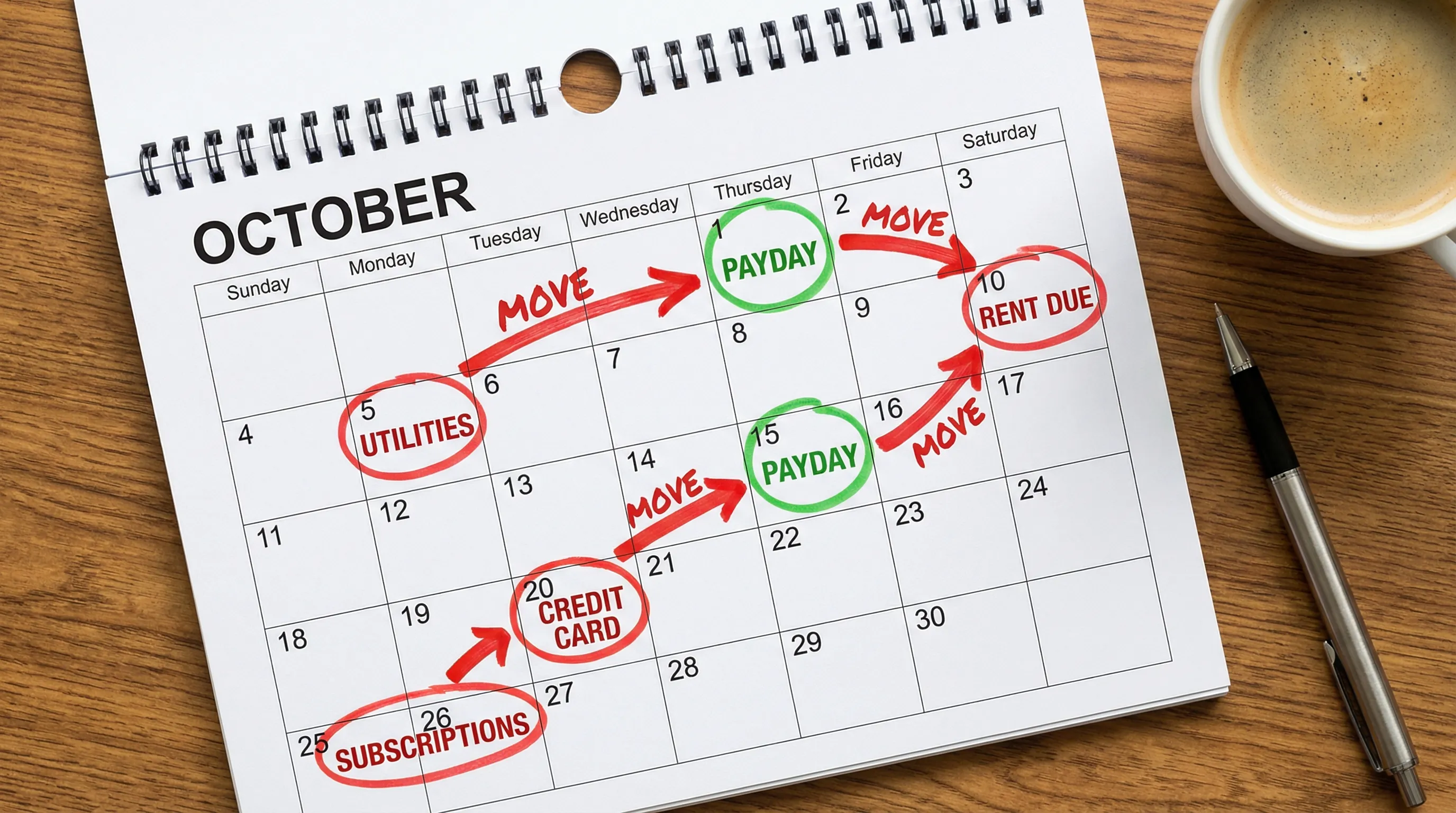
Step 5: Decide what happens in “three paycheck” months (before you’re emotionally compromised)
If you’re biweekly, twice a year you’ll get a third paycheck in a month. That paycheck is a weapon. It can build your future or it can buy a Peloton that becomes a coat rack.
Pick one default:
- Buffer Month Plan: use the third paycheck to build a one-month cushion until you are “one month ahead.”
- Debt Crusher Plan: throw it at high APR debt like it insulted your family.
- FIRE Accelerator Plan: invest it and let compounding do the flexing.
- True Expense Catch-up Plan: fill sinking funds (car, medical, travel) so next year hurts less.
If you’re not sure which lever matters most, start tracking your savings rate consistently. It’s the scoreboard. Here’s the deep dive: Savings Rate Calculator: The One Metric That Matters.
One-liner: Extra paychecks are not “treat yourself” money, they’re “change your life” money.
Step 6: Automate the system so willpower can retire early
The dream is not “perfect discipline.” The dream is fewer decisions.
Automations to set up:
- Autopay for fixed bills (timed just after payday)
- Automatic transfers to sinking funds and goals
- Automatic investing (even if it’s small)
Then keep one simple ritual.
The 12-minute Payday Checklist
| Step | What you do | Why it matters |
|---|---|---|
| Confirm income landed | Check deposits match expectations | Catches payroll mistakes fast |
| Fund upcoming bills | Cover anything due before next paycheck | Prevents timing-based overdrafts |
| Top up true expenses | Add to sinking funds | Stops “surprise” bills |
| Pay future you | Invest, extra debt, emergency fund | Builds momentum |
| Set flex guardrail | Decide your safe-to-spend | Prevents casual sabotage |
If you want a flexible budgeting structure that doesn’t crack under real life, pair this with: Flexible Budgeting: Build a System That Bends.
Where FIYR fits (quietly, but powerfully)
Recurring income planning falls apart when your numbers are wrong, your categories are messy, or your “recurring” bills are secretly multiplying like gremlins.
FIYR helps you run this like a system, not a craft project:
- Track income and spending in one place, with clean charts and history
- Use custom categories and category groups so bills, goals, and true expenses stay separated
- Set automatic transaction rules so recurring income and recurring bills get categorized correctly
- Use subscription tracking to catch the “wait, we still pay for that?” charges
- Watch savings rate and net worth move, because motivation loves a scoreboard
- Tie it all to a FIRE timeline with FIYR’s FIRE-focused insights and calculator
If you are already drowning in subscriptions, this is worth a read: Subscription Overload Solutions: Cut the Noise, Keep the Joy.
The punchline: Your money doesn’t need more judgment, it needs better plumbing.
A simple template: your Recurring Income Plan (copy this)
Fill this out once, then review monthly.
- Baseline monthly net income: $______
- Payday cadence: weekly / biweekly / semimonthly / monthly
- Fixed bills total (monthly): $______
- True expenses contribution (monthly): $______
- Future you (investing, extra debt, EF) target: $______
- Flex spending cap (monthly): $______
- “Extra income” rule (bonuses, third paychecks): __Buffer / Debt / Invest / True expenses__
A good system makes your next move obvious.
Frequently Asked Questions
What is recurring income planning? Recurring income planning is a payday-based system that assigns jobs to each incoming deposit (bills, sinking funds, goals, flex) so monthly cash flow stays predictable. How do I plan recurring income if I get paid biweekly? Use a baseline of two paychecks per month for your regular plan, then pre-assign the two “extra” paychecks each year to a buffer, debt payoff, investing, or true expenses. What if my income is irregular or includes commissions? Separate income into Core (reliable) and Bonus (variable). Build your budget off Core, then use Bonus to build a buffer and fund goals. A rolling average helps stabilize planning. How much should I keep as a buffer for timing issues? Many people aim for at least one paycheck worth of buffer, then build toward being one month ahead. The right number depends on bill timing, income stability, and fixed cost percentage. Do I still need a budget if I do recurring income planning? Yes, but it becomes easier. Recurring income planning controls timing and automation, while your budget controls category limits and priorities.Turn your next payday into a system (not a celebration)
If you want recurring income planning to actually stick, you need two things: a clear waterfall and clean data.
FIYR is built for that. It helps you track income, expenses, subscriptions, net worth, and savings rate in one place, then automate the categorization so your payday plan runs without constant babysitting.
Start simple: set your baseline, assign your paychecks, and use FIYR to keep the numbers honest. Your future self will call it “discipline.” You’ll call it “finally not panicking on the 28th.”