Emergency Budgeting: The “Oh No” Plan You Need
Your budget is a fair-weather plan.
Emergency budgeting is the hurricane protocol you only remember you need when the windows start shaking.
If you’ve ever had a month where your car decided to cosplay as a casino, your kid got sick, your hours got cut, or your landlord discovered the concept of “market rate,” you already know the feeling. It’s not “I should cut back on lattes.” It’s “Oh no, this is real.”
Here’s the uncomfortable truth: most people don’t have enough slack to absorb a real-world punch. CNBC reported that about 60% of Americans are living paycheck to paycheck, and only 45% have an emergency fund (with 26% of those under $5,000). Add that 61% are in credit card debt, and you’ve got a country running on vibes and minimum payments. Source: CNBC.
Emergency budgeting is how you stop the bleeding, buy yourself time, and make decisions from a position of control instead of panic.
And yes, it can be done without living on rice and sadness.
What emergency budgeting is (and what it isn’t)
Emergency budgeting is a short-term operating mode you switch on when income drops or expenses spike, and your normal budget is no longer true.It’s not:
- A personality
- A permanent vow of austerity
- A shame spiral because you didn’t predict a transmission failure
It is:
- A triage plan
- A cash protection system
- A runway calculator (how many weeks until things get ugly)
Emergency budgeting doesn’t ask, “What do I want?”
It asks, “What keeps me housed, fed, insured, and employed?”
The “Oh No” moment (meet Alex)
Meet Alex. Solid job, decent pay, “I’m fine” energy.
Then: company layoffs. Severance covers a few weeks. Unemployment will take time. Meanwhile, Alex’s spending habits are still calibrated for the old reality: auto-renewing subscriptions, convenience delivery, the casual $18 lunch that somehow happens five times a week.
Alex doesn’t need a perfect budget.
Alex needs a faster truth.
Emergency budgeting is that truth, delivered with love and a little violence.
The 48-hour emergency budget: do this first
If you do nothing else, do this in the first two days. This is the “stop the financial hemorrhage” phase.
1) Freeze the leaks (today)
Your goal is to stop money from leaving your life by default.
- Pause non-essential subscriptions (streaming, apps, memberships, boxes, “premium” anything)
- Turn off one-click buying and saved cards in shopping apps
- Cancel upcoming discretionary services (classes, recurring deliveries, memberships)
- Stop auto-transfers that are no longer safe (extra investing beyond employer match, optional savings goals)
This is not forever. This is you grabbing the wheel.
One-liner worth stealing: In an emergency, convenience is a luxury brand.2) Pull your “runway number” (30 minutes)
You need one number that tells you how much time you’ve got.
Runway (months) = Liquid cash you can use ÷ Bare-bones monthly costsLiquid cash means:
- Checking + savings
- Cash emergency fund
- Money you can access without penalties or selling investments at a bad time
Bare-bones monthly costs means:
- Housing
- Utilities
- Basic groceries
- Minimum debt payments
- Insurance
- Transportation required for work
- Meds and essential healthcare
If you don’t know your bare-bones cost, you’re not budgeting. You’re guessing.
3) Create a one-page “Bare Bones” budget (60 minutes)
This is not your normal budget. This is your survival operating system.
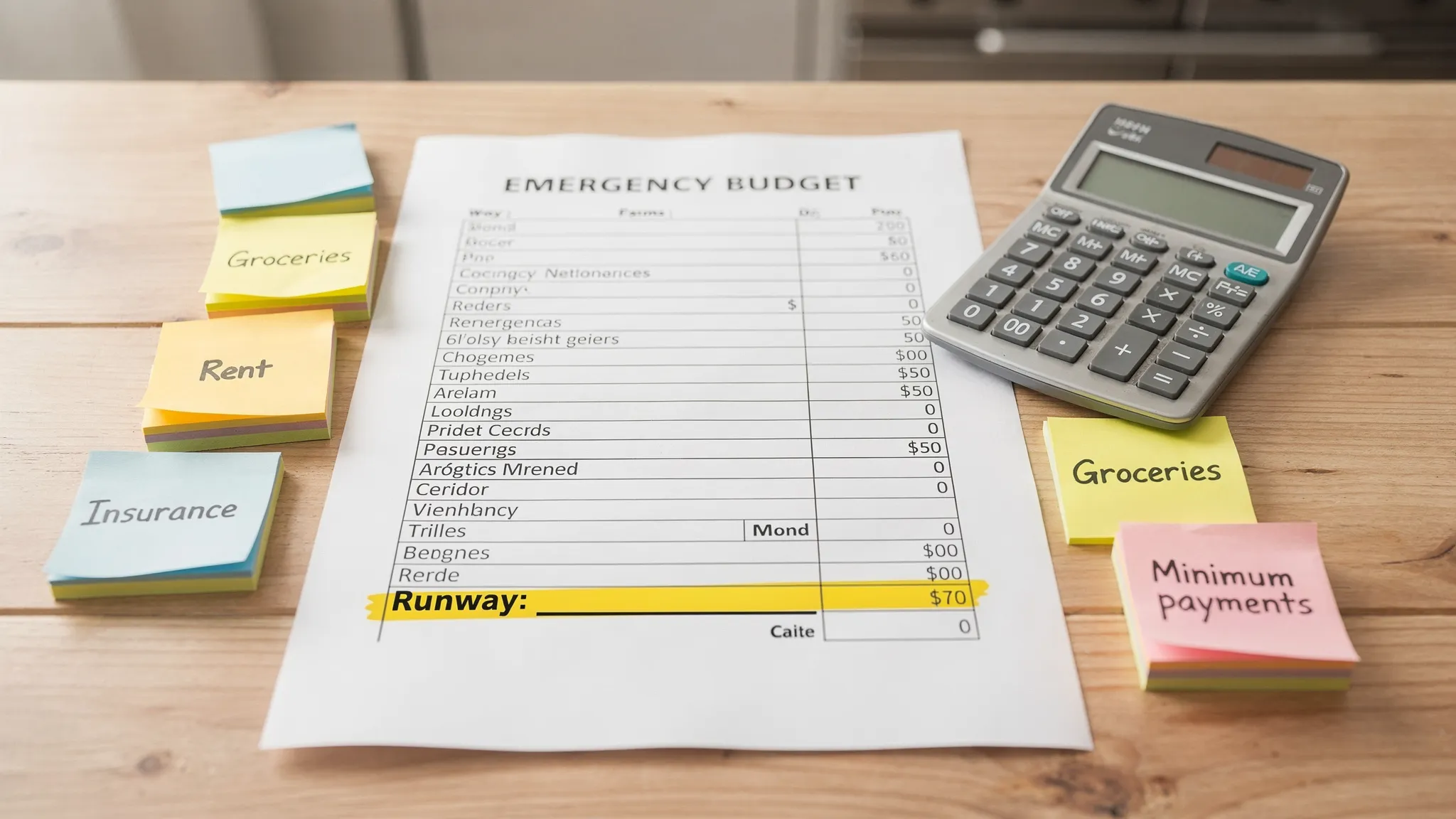
Use this structure (simple, ruthless, effective):
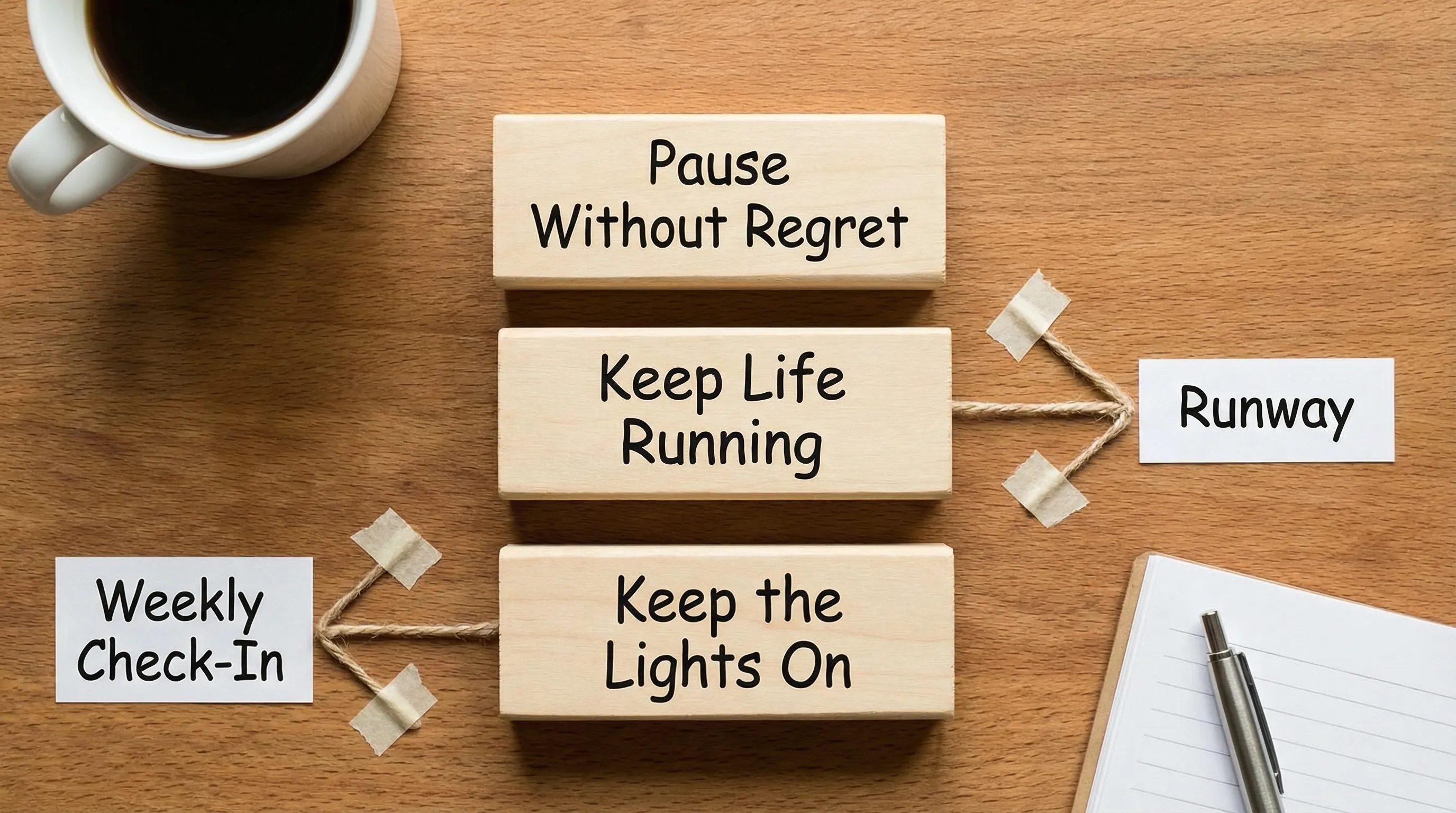
The 3-layer emergency budget (steal this)
Think in layers, not 47 micro-categories.
| Layer | What it includes | Goal | Examples of moves |
|---|---|---|---|
| Keep the Lights On | Must-pay essentials | No missed payments, no disasters | Pay rent/mortgage, utilities, insurance, minimum debt payments |
| Keep Life Running | Essentials with flexibility | Reduce cost without breaking life | Cheaper groceries, pause dining out, cut rideshares, lower fuel spend |
| Pause Without Regret | Everything else | Stop or sharply reduce | Subscriptions, travel, shopping, entertainment, convenience services |
Your emergency budget is basically: Layer 1 gets funded first, Layer 2 gets trimmed, Layer 3 gets put in a coma.
One-liner worth stealing: You’re not “cutting fun,” you’re buying time.Pick your emergency level (so you don’t overreact or underreact)
Not every “Oh No” requires scorched earth. You need the right response for the size of the hit.
| Emergency level | What’s happening | Your target | What changes immediately |
|---|---|---|---|
| Level 1: Squeeze | One-time expense, small income dip | Preserve cash flow for 30 to 60 days | Pause Layer 3, trim Layer 2, protect Layer 1 |
| Level 2: Stabilize | Job loss, big medical bill, major hours cut | Stretch runway to 3 to 6 months | Aggressively reduce Layer 2, renegotiate bills, hardship options |
| Level 3: Survival Mode | No income (or unpredictable), debt pressure rising | Avoid eviction, keep insurance, stop late fees | Deep cuts, sell assets, benefits, creditor calls, temporary income |
If you’re Level 2 or 3, the goal is not elegance. The goal is not drowning.
The big lever: fix your fixed costs (without pretending it’s easy)
Emergency budgeting fails when people only cut the obvious stuff (coffee, takeout) and ignore the big monsters (housing, cars, insurance).
Yes, fixed costs are harder. That’s why they matter.
Housing (the boss level)
If housing is crushing you, you have three levers:
- Negotiate: ask for temporary payment plans, due date changes, or hardship options
- Reduce: get a roommate, rent a room, sublet (if allowed)
- Exit: move when the math says you must (not when pride says you can’t)
If you’re a homeowner facing mortgage stress, start by contacting your servicer and asking about hardship options. If you want a government starting point, the CFPB has guidance on mortgage help for homeowners.
Script you can use (landlord):“Hi [Name], I’m dealing with a temporary income disruption. I want to be proactive. Can we discuss a short-term payment plan or a one-time due date adjustment for the next [30/60] days?”
Transportation (the silent budget assassin)
Car payments + insurance + gas + repairs are a monthly subscription to anxiety.
Emergency moves:
- Reduce driving (bundle errands, fewer trips)
- Shop insurance (yes, even now)
- If the payment is too high, consider selling and downsizing if you can do it without creating a new disaster (like losing access to work)
Insurance (do not cancel the parachute mid-jump)
The temptation in emergencies is to drop insurance. Sometimes that’s rational (optional coverage). Often it’s a trap.
Better options:
- Raise deductibles if it meaningfully reduces premiums
- Remove unnecessary add-ons
- Ask about hardship arrangements
You are trying to reduce risk, not invite more.
One-liner worth stealing: Cancelling insurance to save money is like removing smoke alarms because batteries cost money.The subscription cleanup (aka “who is charging me $14.99 and why?”)
Subscription creep is how adults with jobs wake up broke.
Do a fast audit:
- List every recurring charge (monthly, annual, weird cadence)
- Cancel anything that does not directly protect income, health, or housing
- Downgrade the rest
If you want a reminder that this isn’t just a you-problem, it’s an economy design feature, read FIYR’s take on subscription creep and modern overspending.
A clean rule for emergencies
If it’s not keeping you employed, insured, housed, or medically functional, it goes.
Yes, even the meditation app.
You can meditate for free. You cannot rent an apartment for free.
Debt during an emergency: minimize damage, maximize options
Debt doesn’t care about your feelings. It cares about due dates.
CNBC’s same report noted 61% of Americans are in credit card debt. In an emergency, the goal is to stop your situation from becoming “emergency plus penalties plus credit score collapse.”
Emergency debt rules
- Pay minimums on everything if possible (this is damage control)
- Call lenders early (before you miss) and ask about hardship options
- Avoid new high-interest debt unless it prevents a bigger immediate harm (like eviction)
- Prioritize the bills that keep you functioning (housing, utilities, insurance, transportation required for income)
If you need general guidance on consumer rights and dealing with debt, the CFPB’s debt collection resources are a solid starting point.
Script you can use (credit card company):“Hi, I’m dealing with a temporary hardship due to [job loss/medical issue]. I want to stay current. Are there any hardship programs, payment plans, or interest reductions available for the next [60/90] days?”
You are not begging. You’re negotiating. Big difference.
Get tactical: the Emergency Budget Checklist
This is the part you screenshot. Or print. Or tattoo on the inside of your eyelids.
Same day
- Calculate runway (months)
- Pause Layer 3 spending
- Cancel or pause subscriptions
- Turn off frictionless spending (one-click, saved cards)
This week
- Reprice insurance (auto, renters, home)
- Ask for hardship options (rent, mortgage, lenders)
- Cut grocery spend with a simple plan (no “winging it”)
- Set a weekly money check-in (15 minutes, timer on)
This month
- Rebuild your budget around the 3 layers
- Decide your emergency level (1, 2, or 3) and commit to the matching actions
- Create an exit trigger (more on that below)
The psychological trick: stop budgeting monthly, start budgeting weekly
Monthly budgeting in an emergency is like trying to drive by looking at last week’s weather.
Switch to weekly.
Why it works:
- Emergencies change fast
- Weekly feedback prevents “oops I blew the month by Tuesday”
- You can adjust before the damage is done
Set a weekly “allowance” for Layer 2 spending (groceries, gas, essentials with wiggle room). If you go over, you don’t guilt yourself, you correct quickly.
If you already do a weekly rhythm, keep it. If you don’t, borrow the structure from FIYR’s Weekly Money Check-In habit and make it your emergency control tower.
How to exit emergency mode (because this is a tool, not a lifestyle)
Emergency budgeting needs a finish line. Otherwise, people either:
- Stay in panic mode forever (burnout)
- Snap back to old spending the second they feel relief (whiplash)
Pick clear exit triggers.
Good triggers:
- You’re back to stable income
- Your runway is back above a chosen threshold (example: 3 months)
- You’ve gone 30 days with no new debt and no missed bills
Then you gradually reintroduce Layer 3 spending, on purpose.
One-liner worth stealing: The goal isn’t to suffer, it’s to regain optionality.Where FIYR fits (quietly, but powerfully)
Emergency budgeting is mostly execution, not theory. This is where tracking systems either save you or betray you.
If you’re using a legacy tool that’s clunky, confusing, or built for 2014, you’ll do what most people do: avoid looking.
FIYR is built for looking.
Here’s how to make emergency budgeting easier in FIYR, without turning it into a second job:
Set up “Oh No Mode” in your categories
- Create a category group for Emergency Budget
- Add categories aligned to the 3 layers (Keep the Lights On, Keep Life Running, Pause Without Regret)
- Use custom categories so your budget matches reality, not some default template written by a robot who thinks “Miscellaneous” is a plan
Use rules so panic doesn’t require manual labor
- Create automatic transaction rules for essentials (rent, utilities, insurance, minimum debt payments)
- Auto-tag recurring charges so you can spot and kill subscriptions fast
Track your real scoreboards
- Use income and expense tracking to see if the emergency budget is working
- Watch your savings rate (it will drop in an emergency, that’s normal, the goal is stabilization)
- Keep net worth tracking honest, especially if you’re leaning on liabilities
Use labels to keep the story clean
If your emergency has a name (medical event, layoff month, family travel), label it.
Example labels:
- “Job Search 2026”
- “Medical Sprint”
- “Car Repair Hell”
That gives you a clean after-action review later, and it keeps you from thinking your normal life is suddenly “expensive.”
It wasn’t. You just had a financial earthquake.
The real win: you stop making random decisions
Emergency budgeting is not about being perfect. It’s about being decisive.
When you have a plan:
- You stop doom-refreshing your bank balance like it’s a social feed
- You stop making emotional purchases to cope
- You stop letting subscriptions and convenience spending quietly vote against your future
And you start doing the thing that actually changes outcomes:
You buy time.Because time is the asset that makes every other solution possible.
Your emergency budget won’t feel fun. It will feel like control.
And in an “Oh No” season, control is the whole point.