 FIYR
FIYR How to Prevent Overspending: Practical, Real-World Tips That Work
If your money keeps vanishing by the 15th, it is not the latte, it is the system. The average American is doing financial CrossFit with a paper straw, and the numbers prove it. According to a CNBC report, about 60% of Americans live paycheck to paycheck and 61% carry credit card debt. The American Psychological Association has long found money to be a top stressor for most adults, and recent surveys show roughly 70% are stressed about finances. Reality check, you do not rise to the level of your goals, you fall to the level of your systems.
Here is the part nobody talks about: overspending is engineered. One‑click checkouts, Face ID payments, and subscriptions that multiply like gremlins after midnight. If your budget is not built to fight back, you are playing offense with oven mitts.
Why overspending happens (and why you are not broken)
Three forces drive most overspending, and they are more psychology than math:
- Emotional spending. We buy relief, identity, and status when we are tired, bored, anxious, or celebrating. That dopamine spike? It is expensive.
- Frictionless checkout. Retailers crush “cart friction” for a living. The easier it is to buy, the more you spend. Your thumbprint is a cash‑firehose trigger.
- Optimism bias. Future You is a superhero in our heads, so we assume next month we will spend less, earn more, and finally use that subscription. Then next month arrives and, surprise, Future You wants tacos.
Overspending is not a character flaw. It is a design problem. Change the design, change the outcome.
The antidote: zero-based budgeting
Zero-based budgeting is the envelope system with Wi‑Fi. You assign every dollar a job before the month starts, then you follow those jobs. Income minus planned jobs equals zero. There is no “miscellaneous slush,” no wishful leftover.
- Income, $5,000
- Jobs, Rent $1,800, Groceries $500, Transportation $300, Debt $400, Utilities $200, Insurance $250, Savings $1,000, Fun $250, Sinking funds $300
- Plan total, $5,000
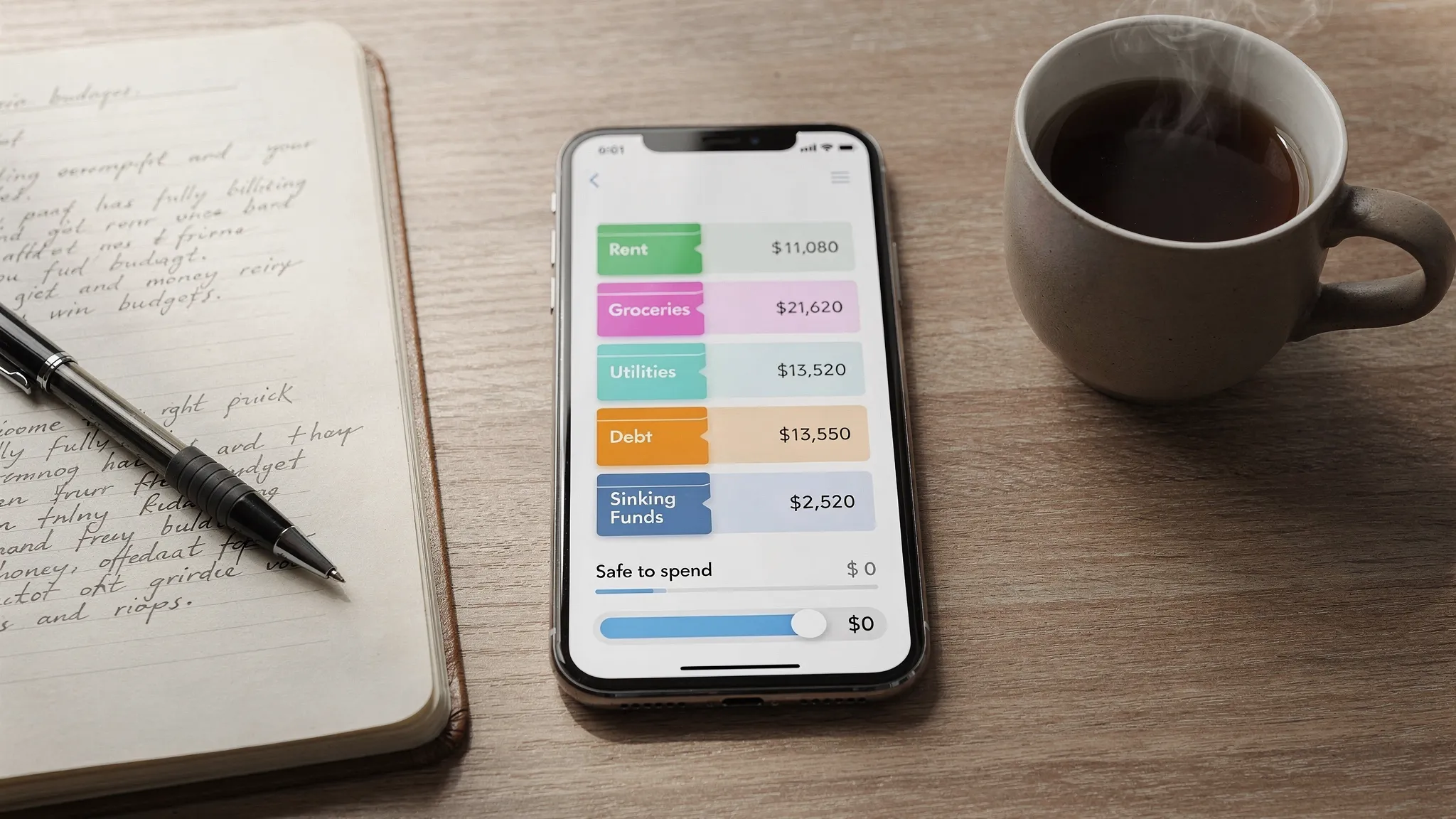
- Safe to spend today, $0, because every dollar already works for you
Assigning every dollar a job prevents category drift, that slow creep where Dining Out quietly steals from Savings and Amazon raides Groceries. When you give money a mission, it stops wandering.
Oh, and this is where a modern tool helps. FIYR lets you set custom categories and category caps, add labels like “New York Trip 2026,” and track a safe‑to‑spend balance so you see, in big friendly numbers, what is actually available after your priorities are funded. It is not a sales pitch, it is just easier when the math is visible.
A 60‑second real‑world scenario
Meet Jordan, a 29‑year‑old marketer with irregular income. Every month ended with “Where did it go?” money. Jordan switched to zero‑based budgeting, set Dining Out to $250 and Fun to $120, created a $200 travel sinking fund, and added a simple rule, any Amazon charge tags to “Household” or “Fun,” never “Groceries.”
Within two cycles, Jordan’s impulse spending calmed, the first $1,000 of the emergency fund was done, and the “New York Trip 2026” label showed the full cost in one place. Not because Jordan became a monk, but because the system made good behavior default.
Quote this to yourself, your budget should feel like a GPS, not a guilt trip.
10 practical habits that actually prevent overspending
You do not need 100 hacks. You need a system with a few habits you will stick to. Start with these.
1) Do zero-based budgeting every month
- Why it works, Every dollar gets a job, so there is no aimless cash to leak away.
- How to do it, Plan next month’s dollars before the month begins, then lock category caps. Base caps on your past 90 days, set a 5 to 10 percent reduction where you want to squeeze.
- FIYR assist, Custom categories, caps, and a safe‑to‑spend balance that updates as you spend.
2) Run a 15‑minute weekly review
- Why it works, Small corrections beat monthly fire drills.
- How to do it, Reconcile transactions, move money between categories if needed, and check which caps are red.
- FIYR assist, Transaction rules (auto‑categorize, tag, and label), so review time is check, not chase.
3) Use category caps plus a “hard stop” rule
- Why it works, Caps create boundaries, and boundaries create choices.
- How to do it, When a category hits its cap, you pause or move cash from another category on purpose. No cap busting without a trade.
- FIYR assist, Visual cap status and easy category moves keep the tradeoffs obvious.
4) Install the 24/72‑hour delay rule
- Why it works, Time shrinks desire. Most impulse spending evaporates if you wait.
- How to do it, If an unplanned item is over $30, wait 24 hours. Over $300, wait 72. If it still matters, fund it from a category.
- Pro tip, Add the item to a “Someday” list with a date. Half will die there peacefully.
5) Make spending harder on purpose
- Why it works, More friction, fewer flings.
- How to do it, Remove saved cards from browsers, uninstall two shopping apps you overuse, disable one‑click, turn off push promos, and log out after each purchase.
- Advanced, Put a spending card in a drawer at home. If you will not drive for it, you do not want it.
6) Audit subscriptions quarterly
- Why it works, Subscription creep is silent lifestyle inflation.
- How to do it, List every recurring charge, annual and monthly. Kill duplicates, downgrade tiers, and bundle where it truly saves.
- FIYR assist, Subscription tracking shows what is billed, when, and the annualized total, so you cut with a clear picture.
7) Pre‑commit “fun money” and automate it
- Why it works, Controlled indulgence prevents blowouts.
- How to do it, Create a weekly allowance category. Spend it guilt‑free, and when it is gone, it is gone. That limit protects the rest of your plan.
- FIYR assist, Category caps and a safe‑to‑spend view keep fun fun and savings sacred.
8) Build sinking funds for “expected surprises”
- Why it works, Car repairs, gifts, and annual premiums are not surprises, they are untimed bills. Funding them monthly prevents big swipes later.
- How to do it, Add categories for Car Maintenance, Gifts, Travel, Annual Subscriptions. Contribute a set amount each month.
- FIYR assist, Labels like “New York Trip 2026” give you a full cost picture in one place.
9) Keep a trigger log for 30 days
- Why it works, You cannot fix what you cannot see. Patterns appear in writing.
- How to do it, After each impulse, note the time, place, emotion, and item. Create a counter move, coffee walk, five pushups, text a friend, whatever defuses you.
- FIYR assist, Add a quick note to a transaction or tag it with a custom label like “triggered” to review later.
10) Close the loop with savings first
- Why it works, What hits savings early is hard to spend later.
- How to do it, Fund savings and debt priorities the day you get paid, then live on the rest. Your savings rate is the real scoreboard.
- Bonus, Boosting your savings rate by even 10 percentage points can shave years off your financial independence timeline, see our guide on boosting your savings rate.
Write this on a sticky note, Decisions at the beginning protect you from decisions in the moment.
The leak your budget can’t see: messy categories
Habits only work if the numbers they react to are true. The sneakiest overspending leak is not a purchase at all, it is bad data that makes you feel fine right up until you are not. A budget quietly breaks when:
- Amazon is 37 different life choices, all filed under “Shopping”
- Venmo is half dinner and half rent, but it all lands in one place
- Refunds and reimbursements smear the totals
- Credit card payments get counted as spending (or not counted at all)
- Everything uncategorized becomes “Misc,” the budget witness protection program
The fix is fewer, better categories: 8 to 12 decision categories you actually control, plus one honesty bucket called Needs review for anything messy. Use labels for context instead of inventing new categories: keep normal categories and tag a wedding, a reno, or a trip with one label across all of it. Then add transaction rules for your repeat offenders so the cleanup happens automatically.
The “Leak Check” scoreboard
Run this once a week for five minutes. Overspending hates surveillance.
| Leak | What to measure | What “bad” looks like | The fix |
|---|---|---|---|
| Recurring charges | Total subscriptions + memberships per month | You’re surprised by the number | Audit, cancel, cap, one in one out |
| True expenses | How many lumpy costs hit your credit card | Every month has a “random” bill | Sinking funds, monthly-ize annual costs |
| Category lies | % of spending in Misc/Uncategorized/Needs review | You can’t explain where money went | Simplify categories, add labels, create rules |
For recurring charges, adopt the One In, One Out rule: want a new subscription? Cancel one first. It stops subscription creep without forcing you into deprivation.
Your 15‑minute weekly review template
Block 15 minutes, same time each week. Coffee helps, drama does not.
- Step 1, Reconcile. Categorize the last week’s transactions, fix any mislabels.
- Step 2, Check caps. Which categories are hot, cool, or overspent. Move money only if it keeps priorities intact.
- Step 3, Scan subscriptions. Any surprises? Any trials ending soon? Cancel or calendar them.
- Step 4, Update sinking funds. Add this week’s contributions and peek at progress.
- Step 5, Reality check. One thing to stop doing next week, one thing to keep doing.
FIYR speeds this up with automatic transaction rules and a live safe‑to‑spend balance. The review becomes a tune‑up, not a rescue mission.
Build friction into your checkout flow
Frictionless checkout is great for businesses, not your net worth. Bring back a little friction.

- Delete saved cards and autofill from browsers. Yes, it is annoying. That is the point.
- Remove one shopping app you scroll mindlessly. Replace with a notes app “Someday” list.
- Disable one‑click purchases and Face ID on retail sites. Make yourself type the password.
- Turn off promotional push notifications and marketing emails most likely to trigger you.
The best overspending tips are boring on purpose. Boring builds wealth.
If your income is irregular, do this
Freelancers, gig workers, small business owners, this is how you prevent overspending when paychecks are unpredictable.
- Budget only money you have. Not invoices. Not vibes.
- Pay yourself a set “salary” from a holding account each month. Keep 1 to 2 months of operating cash there as a buffer.
- Pre‑slice taxes into a separate account the moment money hits.
- Use larger sinking funds for slow seasons. Your future self will send a thank‑you meme.
Zero‑based budgeting shines with variable income, because it forces today’s dollars into today’s jobs. FIYR’s category caps and safe‑to‑spend view tell you exactly what is truly available, even when income is lumpy.
Common spending triggers and counter moves
| Spending trigger | Why it hits | Counter habit |
|---|---|---|
| Late‑night scrolling | Tired brain, low willpower | Phone in another room after 9 pm, add to “Someday” list, revisit next day |
| Boredom at work | Quick dopamine via add‑to‑cart | 3‑minute walk, water break, write the impulse in a trigger log |
| “Limited‑time” sales | Scarcity pressure hijacks logic | Ask, Would I buy it at full price, if not, pass. Wait 24 hours |
| Social events | Belonging tax | Pre‑commit a fun‑money cap, pay in cash or debit |
| Autopay subscriptions | Invisible spend | Quarterly audit, downgrade or cancel, set renewal reminders |
Here is the punchline, your environment beats your willpower. Make the right thing the easy thing.
Data, motivation, and the safety net
- 60% live paycheck to paycheck and 61% carry card debt, per CNBC. You are not alone, and you are not stuck.
- Only about 45% report having an emergency fund, and many have less than $5,000. If you want fewer “emergency” swipes, build your cushion. Start with our guide to emergency funds.
- Money stress is real, and roughly 70% report it. You will feel calmer when your plan is visible and your priorities are funded first.
Putting it all together, a 30‑day reset
Week 1, Build your zero‑based plan and caps. Set up sinking funds. Delete one shopping app and remove saved cards.
Week 2, Start your weekly review. Add the 24/72 rule. Track triggers.
Week 3, Audit subscriptions. Cancel one, downgrade another, calendar annual renewals.
Week 4, Measure, Look at your safe‑to‑spend trend, category hits, and what you would change next month.
Want one extra win, route savings to a high yield account on payday. Out of sight, out of swipe.
If you want to see how this reduces debt runway, read our quick guide to debt payoff strategies.
Frequently Asked Questions
What is zero-based budgeting and why does it help prevent overspending? Because you assign every dollar a job before the month begins, there is no extra cash sloshing around to fuel impulse spending. It removes ambiguity and forces tradeoffs on paper, not at the register. How often should I review my budget? Once a week for 15 minutes. Monthly is too slow, daily is overkill for most people. Weekly gives you time to adjust before caps break. How do I stop impulse spending without feeling deprived? Delay purchases for 24 to 72 hours, pre‑fund a small weekly fun‑money allowance, and make checkout harder. You still buy things you want, you just buy them on purpose. What if my income is variable? Budget only money you have, pay yourself a steady “salary” from a buffer, and use larger sinking funds. Zero‑based budgeting is ideal for irregular income because it allocates today’s cash to today’s jobs. Do I need cash envelopes? Not unless you want them. Digital envelopes with category caps and a safe‑to‑spend view accomplish the same thing with fewer trips to the ATM. How do I handle subscriptions I actually use? Keep them, but right‑size them. Downgrade premium tiers, rotate services month to month, and calendar renewal dates so you review them on purpose. ---Here is your move, pick two habits from this list and install them this week. Then add one more next week. Systems beat willpower, and the compounding is real.
Oh, and if you want to make this feel like autopilot, FIYR gives you custom categories and rules, category caps, a safe‑to‑spend balance, subscription tracking, and labels for big goals like “New York Trip 2026.” Put your plan on screen, then get on with your life. Explore more FIRE‑friendly guides and tools at the Fiyr blog.