 FIYR
Best App to Track Net Worth in 2026
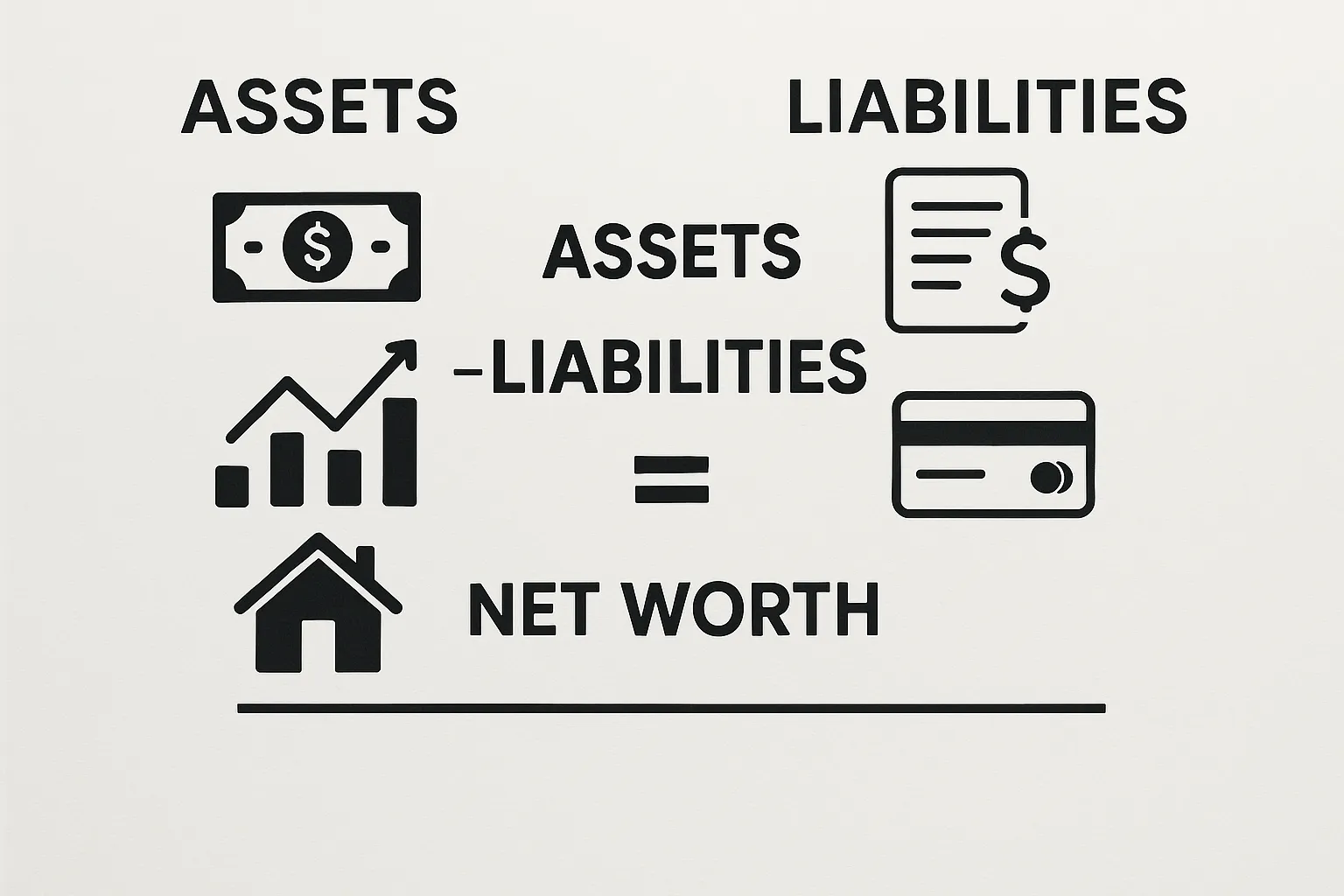
If you want one number that tells you whether you are moving forward financially, it is your net worth. In 2026, millions of former Mint users and spreadsheet fatigued budgeters are looking for the best app to track net worth without losing the bigger picture of spending, savings rate, and the path to financial independence. The right tool should be simple enough to use every week, flexible enough to track anything you own or owe, and smart enough to translate data into decisions.
According to the Federal Reserve’s 2022 Survey of Consumer Finances, the median U.S. household net worth rose to roughly $192,900, a record high, driven by rising home and asset values. Tracking your own net worth, and the drivers behind it, is how you make that trend real in your life. Source: Federal Reserve, Changes in U.S. Family Finances From 2019 to 2022.
What makes the best app to track net worth in 2026
Before you pick an app, align on the must haves. The best net worth tracker in 2026 should:
- Track every asset and liability, not just bank accounts. That means brokerage, retirement accounts, HSAs, real estate, mortgages, student loans, vehicles, small business equity, and even one-off assets like collectibles.
- Offer custom assets and custom liabilities. You should not be limited to only what a bank feeds you.
- Make spending insights part of the story. Net worth moves because of cash flow. Your tool should track income, expenses, categories, and trends so you can act on what is changing your balance sheet.
- Support customizable categories, transaction rules, and labels. You need consistent categorization and the ability to slice spending by projects or life events such as “New York Trip 2026,” across multiple categories.
- Include budgets you will actually use. Dynamic budgets, goal-based envelopes, and a clear safe-to-spend number keep day-to-day decisions aligned with long term plans.
- Monitor subscriptions. Recurring charges quietly drag savings and slow net worth growth unless you see them clearly.
- Show savings rate and project your FIRE date. A great net worth app connects dots from spending to saving to investing to a timeline you can visualize.
- Keep the experience clean, fast, and trustworthy. Simplicity, transparency, and accurate math beat bells and whistles you never touch.
Why FIYR is a best-in-class net worth tracker for FIRE-minded users
FIYR is a modern money tracker that combines a flexible spending tracker with comprehensive net worth tracking and FIRE-focused planning. It is designed as a clean, customizable alternative to Mint, Monarch Money, Copilot, Rocket Money, and Quicken, with a focus on flexibility and affordability.
What you can do in FIYR:
- Track net worth across anything you own and owe. Add traditional accounts plus custom assets and custom liabilities so your picture is complete.
- See money flows that drive net worth. FIYR tracks income and expenses with clear charts so you know why your number moved this month.
- Make categories work your way. Create custom categories and category groups, then use automatic transaction rules to keep your data clean going forward.
- Add custom labels to transactions. Tag purchases and travel with labels like “New York Trip 2026” to see total cost by label, broken down by category, without messing up your core categories.
- Budget with confidence. Build goal-based budgets, monitor a safe-to-spend balance, and adjust dynamically when life changes mid month.
- Track subscriptions. Get visibility into recurring charges and their impact on your savings rate.
- Measure progress that matters. FIYR calculates savings rate and includes a FIRE date calculator so you can connect daily choices to long term independence.
- Keep a single source of truth. Net worth, spending, savings, subscriptions, and goals live together, which means fewer surprises and better decisions.
Must-have net worth features and how FIYR handles them
| Capability | Why it matters | FIYR approach |
|---|---|---|
| Net worth tracking | See total financial position over time | Built in net worth dashboard with assets and liabilities |
| Custom assets and liabilities | Track real estate, private holdings, or one-off loans | Add custom entries with editable values |
| Income and expense tracking | Understand the drivers behind net worth changes | Charts for income, expenses, and trends |
| Categories and rules | Keep data consistent without manual cleanup | Custom categories and automatic transaction rules |
| Labels for projects | Analyze trips, events, or side hustles across categories | Custom labels like “New York Trip 2026” |
| Budgets and safe-to-spend | Align cash flow with goals | Goal-based budgeting with a live safe-to-spend balance |
| Subscription tracking | Stop quiet leakage from recurring charges | Dedicated subscription tracking |
| Savings rate and FIRE | Turn data into a timeline for independence | Savings rate calculator and FIRE date projection |
Quick start: track your net worth in FIYR in 20 minutes
1) List what you own and owe. Write down checking, savings, 401(k), IRA, HSA, brokerage, real estate, vehicles, crypto, business equity, plus mortgages, student loans, personal loans, and credit cards.
2) Add assets in FIYR. For everything that does not fit a standard account, create a custom asset. You can track anything that carries value.
3) Add liabilities. Enter balances for mortgages, auto loans, and credit cards. Create a custom liability for personal notes or unique debts.
4) Categorize your transactions. Create custom categories and category groups that match your life, then set transaction rules so new activity categorizes the way you want automatically.
5) Create a budget you will use. Start with a simple monthly plan for essentials, savings, and fun. Turn on goal-based budgeting and watch the safe-to-spend number so you know what is left after commitments.
6) Label major events. Add a label like “New York Trip 2026” to every related transaction. In seconds you can see the total cost of the trip by category and the impact on your month.
7) Turn on savings rate and FIRE projection. Set your annual spending target, then use FIYR’s FIRE date calculator to see how your savings rate and portfolio growth influence your independence timeline. If you are new to FIRE concepts, read our guides to the 4% rule and a complete FIRE timeline.
8) Review subscriptions. Tag recurring charges so FIYR can track and report them. Cancel or adjust as needed to free up dollars for investing.
9) Check your dashboard weekly. Watch net worth, spending, savings rate, and goal progress. Make one small improvement each week and let compounding do the rest.
Make your net worth actionable
Your net worth is the scoreboard, but your playbook is cash flow, debt, and investing. FIYR brings these together so you can act.
- Build the right cash cushion. Set a cash target and keep it in a high yield account for emergencies. Our guide explains how much to hold and where to store it, see the emergency fund playbook.
- Raise your savings rate. Every extra percentage point cuts years off your FIRE date. Learn how to find room in your budget with our savings rate guide.
- Invest simply and consistently. Most long term portfolios can be simple, low cost, and diversified. If you are getting started, read our beginner’s guide to index fund investing.
- Attack debt with intent. Choose the debt snowball or debt avalanche based on your motivation and math. Our comparison of debt payoff strategies can help you pick and stick with a plan.
- Align the destination. Decide whether you are aiming for Lean, Regular, or Fat FIRE, then set the right spending target and asset mix. Explore Lean FIRE vs Fat FIRE to clarify your path.
- Maximize tax-advantaged accounts. 401(k)s, IRAs, HSAs, and solo 401(k)s change the math on your timeline. See our guide to maximize retirement contributions.
For a full blueprint that ties these steps together, bookmark our step by step guide to financial freedom.
Spreadsheets vs free apps vs paid apps: who actually wins?
None of them universally. Pick the tool that matches your failure mode.
- Spreadsheets are elite if you love control and actually reconcile every month. Total flexibility, explicit valuation logic, nothing hidden. The catch: manual imports, easy user error, and a brutal backlog if you fall behind. If you are allergic to manual steps, you will ghost the workflow by February.
- Free apps give you a broad view, often with good investment analysis, but usually limited customization. They can be enough if your finances have few edge cases.
- Paid apps blend automation with control: rules, labels, custom assets, and clean transfer logic. The fee should pay for itself in fewer mistakes and better decisions.
Whichever you choose, accuracy depends on the rules. Treat credit card payments as transfers to a liability, not as new spending, or any tool will double count.
How FIYR compares to other options in 2026
- Monarch Money and Copilot. Both are polished budgeting apps that many ex Mint users try. FIYR focuses on greater flexibility with custom assets and liabilities for a truer net worth picture, plus FIRE specific tools in the same place. Many users find FIYR simpler to maintain and more affordable long term.
- Rocket Money. Strong on bill awareness and negotiation. FIYR includes subscription tracking too, but places heavier emphasis on budgets, savings rate, and FIRE.
- Quicken and legacy tools. Powerful but often complex. FIYR offers a cleaner, modern interface with customizable categories, rules, and labels, and a net worth view that is easy to understand.
- Empower Personal Dashboard and spreadsheets. Empower is great for investment views, spreadsheets offer full control if you love building models. FIYR aims to give you that flexibility without maintenance, while connecting cash flow, net worth, and FIRE in one app.
Feature sets change, so always check the latest from any provider. If your priority is complete net worth tracking with budget, labels, subscriptions, savings rate, and a FIRE date calculator in one simple app, FIYR should be on your short list.
Net worth tracker app scorecard
Before committing to any app (FIYR included), score it on your own accounts.
| Feature | 0 points | 1 point | 2 points |
|---|---|---|---|
| Asset coverage | Only bank accounts | Most major accounts | Sync plus flexible manual assets |
| Liability tracking | Missing or basic debts | Tracks balances | Tracks balances with useful context |
| Data cleanup | Manual chaos | Basic editing | Rules, categories, and review workflows |
| Cash flow link | Net worth only | Some spending views | Income, expenses, subscriptions, and savings rate |
| FIRE or goal planning | None | Simple goals | Goals plus timeline projections |
| Customization | Fixed categories | Some edits allowed | Custom categories, groups, and labels |
| Trend visibility | Static snapshot | Basic charts | Clear trends and component breakdowns |
| Control | Hard to audit | Some transparency | Editable, understandable, portable system |
10 or below works for casual tracking but will frustrate anyone with debt, irregular income, family expenses, or FIRE goals. 11 to 14 is decent. 15 or 16 means you have a real system.
Common net worth tracking mistakes to avoid
- Tracking only assets. It makes you feel rich while debt quietly eats the furniture.
- Valuing your home and car too aggressively. Conservative estimates beat optimistic listing-site numbers.
- Counting future income. A paycheck you have not received is not an asset.
- Ignoring credit card float. Purchases count when they happen, not when the payment clears.
- Counting unvested equity at full value. If you cannot access it, discount it or track it separately.
- Checking daily and overreacting. Monthly tracking beats emotionally day trading your self-worth.
For a step-by-step setup, see FIYR Net Worth Tracker: How to Set It Up for Accuracy.
The monthly review that keeps you on track
| Metric to review | Why it matters | How to act in FIYR |
|---|---|---|
| Net worth change vs last month | Confirms progress or signals a problem | Open the net worth view and note the drivers, then adjust budget or goals |
| Savings rate | Directly controls your FIRE timeline | Use savings rate view, then trim categories or subscriptions |
| Top 3 categories over budget | Targets high impact changes | Reduce next month’s plan or set a label to audit those purchases |
| Subscription drift | Catches quiet increases | Review subscriptions list, cancel or downgrade |
| Debt balance trend | Measures interest drag leaving your net worth | Choose snowball or avalanche in your payoff plan and tighten spending |
| FIRE date movement | Keeps long term focus | Update assumptions, revisit 4% rule and index fund allocations |

Frequently Asked Questions
What exactly should count in my net worth? Include all assets you can reasonably value, such as cash, investments, retirement accounts, HSAs, real estate, vehicles, and business equity, and subtract all liabilities like mortgages, student loans, auto loans, and credit card balances. How often should I update non-brokerage assets like real estate or vehicles? Monthly or quarterly is usually enough. Set a reminder to review values periodically rather than chasing daily noise. Can I track custom assets and liabilities in FIYR? Yes. FIYR lets you add custom assets and custom liabilities so you can maintain a complete balance sheet even for nonstandard holdings. Why does a spending tracker matter for net worth? Net worth changes because of cash flow. Seeing income, expenses, and trends explains why your number moved and shows where to adjust. How do labels help beyond categories? Labels let you group transactions across categories. For example, apply the label “New York Trip 2026” to airfare, dining, and lodging to see the total trip cost without changing core categories. What is a safe-to-spend balance? It is the amount you can confidently spend after accounting for bills, savings goals, and upcoming obligations. FIYR’s goal-based budgeting updates a safe-to-spend number as transactions post. Can FIYR help me estimate my FIRE date? Yes. FIYR includes a FIRE date calculator tied to your savings rate and spending assumptions. For background on the approach, read our guides to the 4% rule and a complete FIRE timeline. Is FIYR a good Mint replacement for net worth tracking? FIYR was built as a modern alternative for Mint users who want flexible categories, rules, custom assets and liabilities, subscription tracking, and FIRE projections in one place.Make your next month your best month
If you want the best app to track net worth in 2026, choose one that turns data into action. FIYR brings net worth, spending, subscriptions, budgets, savings rate, and your FIRE date together so every decision moves you forward. Add your accounts and custom assets, set your goals, and let FIYR keep you honest week after week.
Want a deeper refresh on the fundamentals while you set up FIYR? Start with our step by step guide to financial freedom and the savings rate playbook, then build a simple index fund portfolio as your engine.
References: Federal Reserve Board, Changes in U.S. Family Finances from 2019 to 2022: Evidence from the Survey of Consumer Finances, 2023, https://www.federalreserve.gov/publications/2023-bulletin-changes-in-us-family-finances-from-2019-to-2022.htm